
Recently, the “100-Million-Yuan Villa Sales Contract Case” represented by Zhenghan Law Firm Law Firm has come to a conclusion. The Supreme People’s Court ruled in a retrial to dismiss all the opposing party’s applications, uphold the final judgment of the Shanghai High People’s Court in favor of the appellant, and confirm the buyer company’s ownership of the villa in question. Spanning nearly 8 years, the case went through multiple procedures including dismissal of the lawsuit in the first instance, order for trial in the second instance, victory in the retrial first instance, affirmation on appeal, and victory in the retrial at the Supreme People’s Court, covering both civil and criminal fields. In the end, it recovered for the client (the buyer) a scarce property with historical protection value worth over 100 million yuan, demonstrating Zhenghan Law Firm lawyers’ outstanding capabilities in the field of major and complex civil and commercial dispute resolution.
Case Background: A “Rashomon”-Style Real Estate Battle
In 2017, the buyer company signed a house sales contract with Seller S, purchasing a garden villa with historical protection and collection value on Wukang Road in Shanghai for 100 million yuan. After the online signing of the contract, the buyer paid the full 100 million yuan purchase price to the seller’s bank account in a lump sum, but the seller refused to transfer the property title. The buyer had no choice but to file a lawsuit, yet the seller claimed never to have received the purchase price, alleging that the buyer “fabricated a house sale, which was actually a guarantee for private lending”.
The confusing facts plunged the case into a “Rashomon” situation, launching an 8-year journey to “reconstruct legal facts” and “break through the fog”.
Case Difficulties: An Intricate Legal Predicament
1. Extremely High Difficulty in Fact Restoration
After the 100 million yuan purchase price entered Seller S’s account, it was immediately transferred out and frantically circulated among multiple companies related to a third party J within just 1.5 hours, finally ending up in an account of an entity related to the buyer. Seller S claimed that it never actually controlled the funds, and the transaction was a “fraudulent fake house purchase, essentially a loan guarantee”.
2. Frustration in First Instance Due to Criminal Intervention
Seller S repeatedly intervened or delayed the civil trial through various means, including filing a criminal report with the public security organs, applying for procuratorial supervision with the procuratorate, reporting to the discipline inspection commission, and petitioning the court. After a “contract fraud case” was criminally filed, the civil lawsuit was dismissed in the first instance, the case was transferred to the public security organs, and the civil procedure was forced to suspend.
3. Fierce Disputes Over Legal Characterization
Core issues such as whether there was criminal fraud under the house sales contract; if no criminal fraud existed, whether it constituted civil fraud; whether the subject of civil fraud was the third party J or the buyer; whether the contract was revocable under fraud by the third party J; whether the buyer was a bona fide counterpart; and how to characterize the nature of the 100 million yuan funds had no precedents due to the special facts of the case, leading to great disputes over the application of law.
Case Highlights: Key Strategies for Breaking the Deadlock and Winning
1. Visualization Application Assisting the Court in Perceiving Every Detail
Faced with case materials occupying 6.86G of computer memory, including Seller S’s resume, the buyer’s transaction motives and background materials, historical transaction contracts related to the case, fund payment flow records, the intricate equity structure and affiliated relationships of several companies, criminal transcripts of about 10 parties on multiple occasions, WeChat chat records, and complex and messy loan amount and interest calculation details, the legal team sorted out the fund flow and character relationship diagram through “visual charts”, locked in key elements such as the appearance of the transaction during house viewing, the participating parties and environment at the time of signing, the receiving account at the time of payment, a comparison of the similarities and differences in the statements of all parties in the criminal transcripts, and the true expression of intent involved in the WeChat records, successfully restoring the case facts:
The buyer had paid the purchase price in accordance with the contract, and the seller had credulously entrusted its close friend, third party J, with long-term control of its bank card, U-shield, property ownership certificate, and keys, resulting in the loss of control over the purchase price.
During the second instance, the presiding judge even took the initiative to request Zhenghan Law Firm to provide an electronic version of the visualized PPT for the court’s research and discussion of the case.
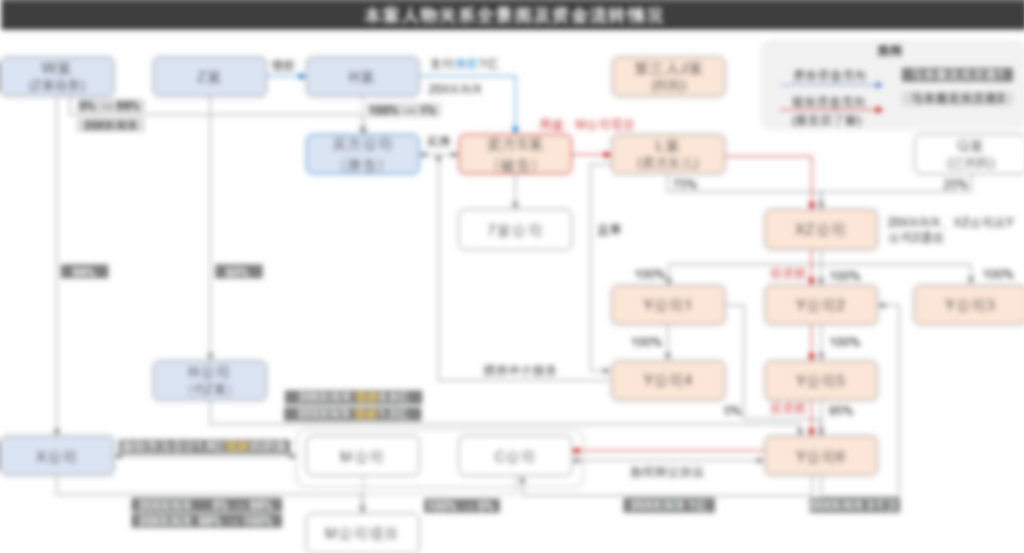
The complex relationships between the parties in the case have been blurred for confidentiality purposes.
2. Civil-Criminal Linkage Breaking Procedural Barriers
When the seller exerted pressure through criminal means, the legal team assisted the client in responding to the public security investigation at the first time and submitted a special legal analysis report. Eventually, the public security organs closed the case on the ground of “no criminal facts”, putting the case back on the right track of civil trial. After the second instance ordered the continuation of the trial, the Shanghai No.1 Intermediate People’s Court ruled in favor of the buyer in the first instance, the Shanghai High People’s Court affirmed the judgment, and the Supreme People’s Court dismissed the application for retrial and upheld the favorable outcome. However, in each civil stage, the seller continued to initiate criminal public security investigations, procuratorial supervision, and discipline inspection commission investigations through various means and procedures. Criminal review ran through the entire civil trial, and the joint response through civil-criminal linkage helped the client achieve a favorable result.
3. Long-Term Layout and Comprehensive Defense Against Derivative Risks
After winning the second instance, the seller obstructed enforcement, triggering 3 derivative lawsuits (including a third-party enforcement objection lawsuit filed by the seller’s ex-husband, a separate ownership confirmation lawsuit in a different court, and a claim for house transfer taxes and fees). The legal team predicted the controversial focuses, solidified the foundation for victory in advance, and ensured the unobstructed realization of the client’s property rights.
Case Value: Adjudication Rules Confirmed by Victory
The case was upheld in the retrial by the Supreme People’s Court, and the legal document sets forth two major adjudication rules:
1. “Fraud by a Third Party” Does Not Constitute Grounds for Revocation
Even if fraud by a third party exists, the validity of the transaction is not affected if the counterparty to the contract is unaware and without fault.
2. Boundaries of the Application of the “Risk-Bearing” Principle
A seller who hands over its account and property right certificates to others and allows the free flow of funds shall be deemed to have disposed of its own rights and may not rely on this to oppose a bona fide buyer.
Handling Lawyers: 8 Years of Professionalism and Perseverance
Relying on Zhenghan Law Firm’s “corporatized” system, multiple partners and lawyers participated in the discussion, research, and formulation of litigation strategies for this major case throughout the 8 years, ensuring the case outcome. Under this system and working model, the lead legal team also grew rapidly: Lawyer Yao Huiyun, the case handler, has advanced from a junior lawyer to a senior partner; this case was the first one handled by Lawyer Lu Xiaocheng after graduation and joining the firm, and Lawyer Lu has now become an experienced dispute resolution lawyer. From the dismissal of the first instance to the affirmation of the retrial by the Supreme People’s Court, the nearly decade-long litigation marathon tested not only the lawyers’ professional competence but also their extreme commitment to the client’s interests. Zhenghan Law Firm’s operation model of “extreme professionalism and in-depth collaboration” seamlessly connected all links of evidence analysis, procedural offense and defense, and derivative risk disposal, ultimately paving a path to victory in the dilemma of “no precedents to follow”!