
Recently, the year-end meeting of the Shanghai Lawyers Association’s Civil and Commercial Litigation Committee was successfully held. Lawyers Wang Chu and An Da from Zhenghan Law Firm were invited to attend and delivered a thematic presentation titled “The AI Era: Re-Understanding Legal Work—From Passive Users to Active Masters,” which deeply integrated legal practice with cutting-edge technology for their colleagues in attendance.
Practical Breakthrough: Building an AI Workflow Like ‘Renovating a House’
In the first half of the presentation, Lawyer An Da took the stage, starting from the perspective of frontline practice. He addressed the pain points lawyers face when using AI and deconstructed the specific methodology for mastering AI.
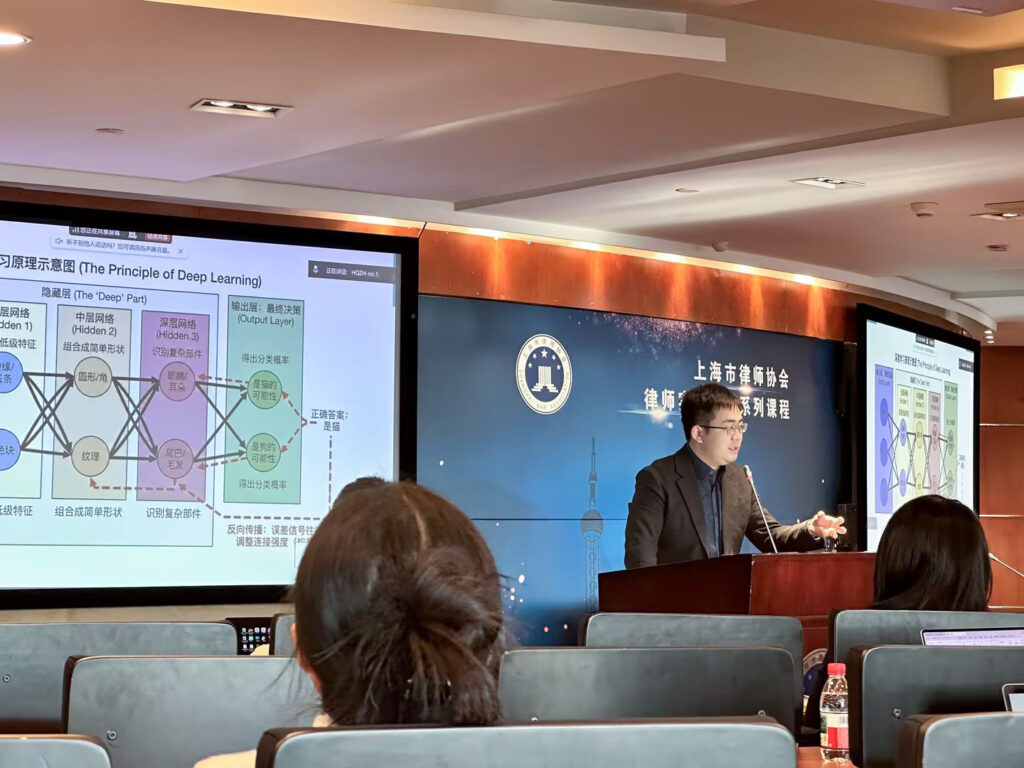
Lawyer An Da pointed out that the key to using AI efficiently lies in establishing the correct interaction model. Through a vivid metaphor, he broke down the complex AI interaction process into three stages of “renovating a house”:
- The Blueprint Stage (Email-Style Communication): For complex tasks like case梳理, using Markdown syntax to construct structured instructions, setting clear roles, context, and rules for AI as if “creating a blueprint”;
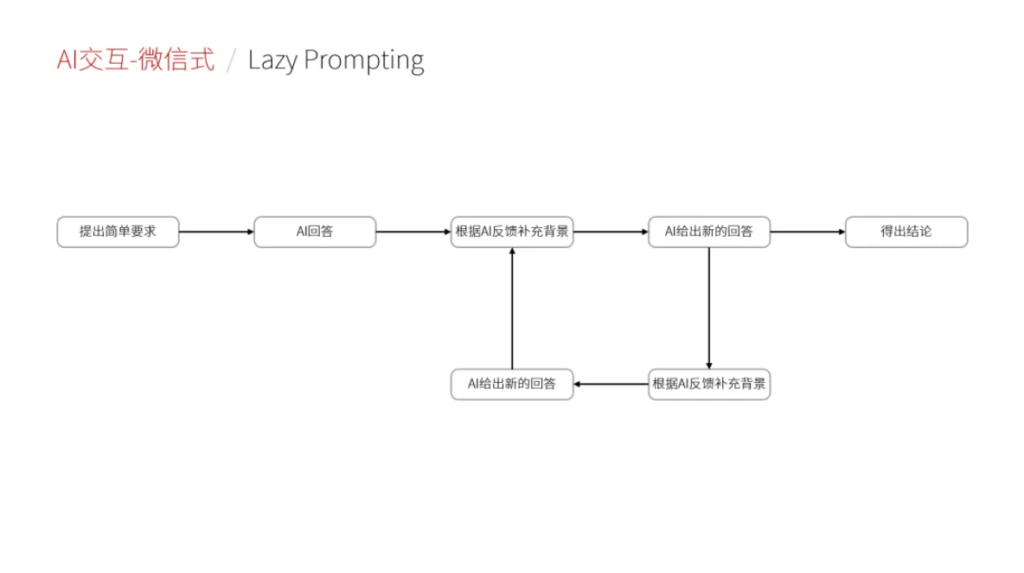
- The Supervisor Stage (WeChat-Style Communication): For detail refinement, adopting a Lazy Prompting strategy, using multiple rounds of short dialogue for continuous fine-tuning, correcting AI’s output like a “supervisor”;
- The Furnishing and Acceptance Stage (Human Finalization): Lawyers conducting the final professional review and polishing.
Combined with civil and commercial litigation scenarios, Lawyer An Da demonstrated on-site how to use tools like Tongyi Farui, Tencent Yuanbao, and Miita to efficiently complete high-frequency tasks such as conflict of interest checks,股权结构穿透, and timeline梳理 of complex case files, showcasing the实战能力 of a “virtual legal team.”
Cognitive Shift: From ‘Vending Machine’ to ‘Apprentice with Experience’
Following this, Lawyer Wang Chu provided a profound升华 of AI applications from the dimensions of underlying logic and industry trends.
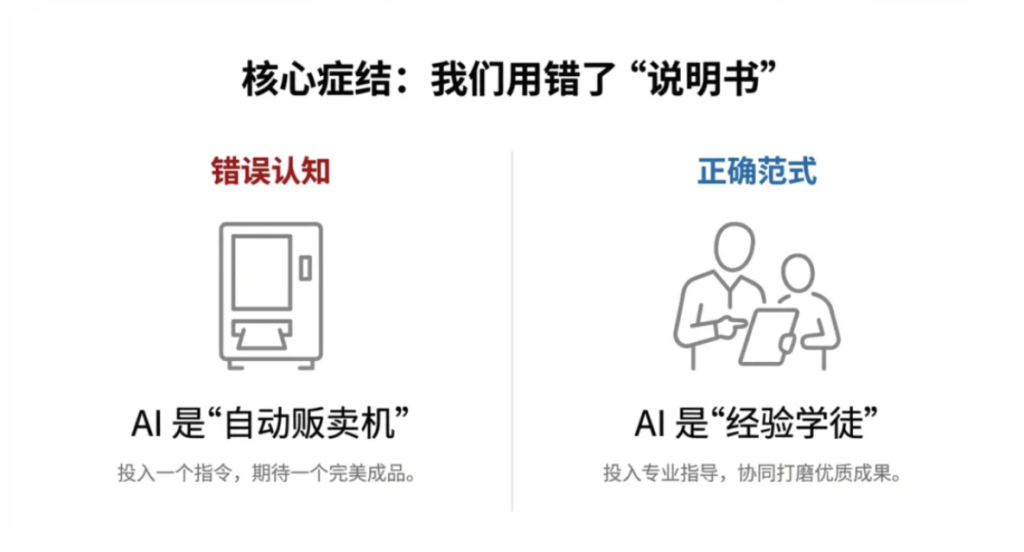
Addressing the困惑 of many legal professionals that “AI often gives irrelevant answers,” Lawyer Wang Chu incisively pointed out that the core issue lies in using the wrong “instruction manual”—many treat AI as a “vending machine” that dispenses answers upon input, but the essence of AI is actually an “apprentice with experience” that requires professional guidance and collaborative refinement.
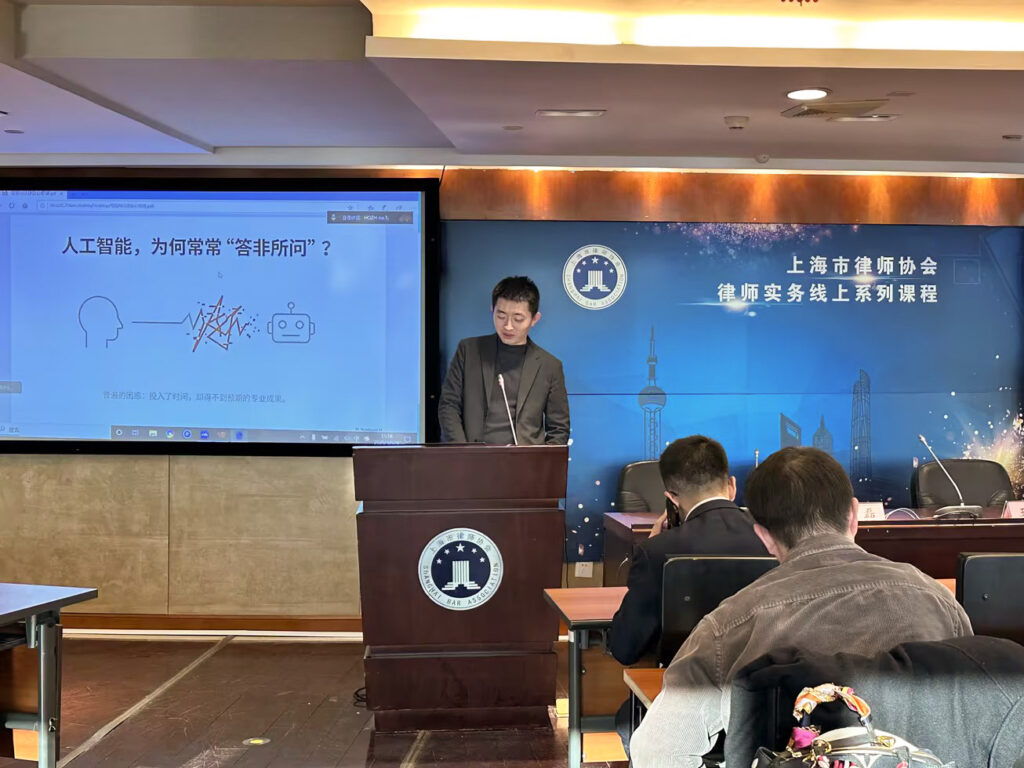
Lawyer Wang Chu further proposed the “Three Laws of the AI Era”:
- The Law of Being Faster Than You: Real competition lies not between humans and AI, but between a person and a “peer who knows how to use AI”;
- The Law of Grumbling: One must not only accept the probabilistic and uncertain nature of AI generation but also understand that the life of law lies in experience, and AI is essentially the “imitation of experience” from massive data;
- The Law of the Strong Getting Stronger: The combination of top legal professionals’ experience with AI’s efficient computing power will form an insurmountable moat.
Lawyer Wang Chu emphasized that the future legal workflow will be a “virtual office” model, where lawyers need to learn to command different “AI Agents” to perform their respective duties.
Safety Red Line: Compliance is the Prerequisite for Technological Empowerment
Addressing the legal professionals’ most significant concern—data security and confidentiality—the presentation specially emphasized the importance of “data anonymization.” By comparing user agreements of mainstream AI models, the lawyers demonstrated on-site how to use technical means like replacing key names, using ciphertext, and image blurring to strictly maintain the bottom line of client information security while enjoying the benefits of technology.
Conclusion: Making the Capable Even More Capable
This presentation not only showcased Zhenghan Law Firm’s深耕 and沉淀 in the field of legal tech application but also conveyed a positive technological价值观 to the industry: in the AI era, lawyers should be liberated from repetitive labor, being empowered by AI, not enslaved by it. This前瞻性与实操性并重的 presentation garnered enthusiastic responses and high praise from the attending guests.